
alleen voor onderzoeksdoeleinden
L-Arginine HCl (L-Arg) NOS Chemisch
Cat.nr.: S3174
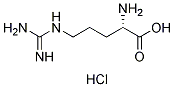
Chemische structuur
Molecuulgewicht: 210.66
Kwaliteitscontrole (Quality Control)
| Gerelateerde doelwitten | PD-1/PD-L1 CXCR STING AhR Immunology & Inflammation related CD markers Interleukins Anti-infection Antioxidant COX |
|---|---|
| Overig NOS Inhibitoren | L-NAME HCl 1400W 2HCl (3R,8S)-Falcarindiol TPEN L-NMMA acetate 2',5'-Dihydroxyacetophenone 6-Biopterin ZLc002 Hederagenin 7-Nitroindazole |
Chemische informatie, opslag en stabiliteit (Chemical Information, Storage & Stability)
| Molecuulgewicht | 210.66 | Formule | C6H14N4O2.HCl |
Opslag (vanaf de datum van ontvangst) | |
|---|---|---|---|---|---|
| CAS-nr. | 1119-34-2 | SDF downloaden | Opslag van stamoplossingen |
|
|
| Synoniemen | (S)-(+)-Arginine hydrochloride | Smiles | C(CC(C(=O)O)N)CN=C(N)N.Cl | ||
Oplosbaarheid (Solubility)
|
In vitro |
Water : 42 mg/mL
DMSO
: Insoluble
Ethanol : Insoluble |
Molariteitscalculator
|
In vivo |
|||||
In vivo formulatiecalculator (heldere oplossing)
Stap 1: Voer onderstaande informatie in (Aanbevolen: een extra dier om rekening te houden met verlies tijdens het experiment)
Stap 2: Voer de in vivo formulering in (Dit is alleen de calculator, geen formulering. Neem eerst contact met ons op als er geen in vivo formulering is in de sectie oplosbaarheid.)
Berekeningsresultaten:
Werkconcentratie: mg/ml;
Methode voor het bereiden van DMSO-moedervloeistof: mg geneesmiddel vooropgelost in μL DMSO ( Concentratie moedervloeistof mg/mL, Neem eerst contact met ons op als de concentratie de DMSO-oplosbaarheid van de batch van het geneesmiddel overschrijdt. )
Methode voor het bereiden van in vivo formulering: Neem μL DMSO moedervloeistof, voeg daarna toeμL PEG300, mengen en verhelderen, daarna toevoegenμL Tween 80, mengen en verhelderen, daarna toevoegen μL ddH2O, mengen en verhelderen.
Methode voor het bereiden van in vivo formulering: Neem μL DMSO moedervloeistof, voeg daarna toe μL Maïsolie, mengen en verhelderen.
Opmerking: 1. Zorg ervoor dat de vloeistof helder is voordat u het volgende oplosmiddel toevoegt.
2. Zorg ervoor dat u het/de oplosmiddel(en) in de juiste volgorde toevoegt. U moet ervoor zorgen dat de verkregen oplossing, bij de vorige toevoeging, een heldere oplossing is voordat u verdergaat met het toevoegen van het volgende oplosmiddel. Fysieke methoden zoals vortexen, ultrasoon of een warmwaterbad kunnen worden gebruikt om het oplossen te bevorderen.
Werkingsmechanisme (Mechanism of Action)
| In vitro |
L-Arginine HCl (L-Arg) supplementation (0.3 mM, 30 minutes) does not induce any significant increases in the peak NO concentration at low level of native LDL. However, at native LDL concentrations from 60-130 mg cholesterol/dL, NO concentration is 2 times higher than before treatment in bovine aortic endothelial cells. This compound results in a significant increase of NO production in n-LDL–treated cells as well as in oxidized -LDL–treated cells in the same cell type. It does not increase O2- concentration at low nativeLDL concentrations but reduces O2- production by 50% when incubated with n-LDL at concentrations >40 mg cholesterol/dL. Furthermore, it completely abolishes O2- production at every oxidized LDL dosage in bovine aortic endothelial cells. |
|---|---|
| In vivo |
L-Arginine HCl (L-Arg) (4 mg/kg/min for 1 hour) treatment decreases superoxide generation by cNOS while increasing NO accumulation in rabbit limb during ischemia/reperfusion. This compound prevents microvessel constriction in the reperfused muscle despite reduced but still apparent interstitial edema in rabbit limb, and results in a significant reduction of muscular reperfusion edema in rabbit limb. Its supplementation (0.1 g/kg, oral) significantly reduces pulmonary artery systolic pressure by a mean of 15.2% after 5 days of therapy in patients with sickle cell disease. Both L-Arginine and ornithine concentrations increased significantly after 5 days of oral supplementation in patients with sickle cell disease. It is associated with a decrease in cardiac index while stroke index is maintained in patients with severe sepsis. Resolution of shock at 72 hours is achieved by 40% and 24% of the patients in the L-Arginine and placebo cohorts, respectively. This compound (450 mg/kg during a 15-minute period) amplifies and sustains the hyperemia (38%) and increases absolute brain blood flow after eNOS upregulation by chronic simvastatin treatment (2 mg/kg subcutaneously, daily for 14 days) in SV-129 mice. |
Referenties |
|
Informatie over klinische proeven (Clinical Trial Information)
(gegevens van https://clinicaltrials.gov, bijgewerkt op 2025-09-17)
| NCT-nummer | Werving | Aandoeningen | Sponsor/medewerkers | Startdatum | Fasen |
|---|---|---|---|---|---|
| NCT06860724 | RECRUITING | Major Depressive Disorder |
University of Delaware |
2025-01-06 | |
| NCT07772882 | NOT_YET_RECRUITING | Platinum Resistant Ovarian Cancer; Fallopian Tube Cancers; Peritoneal Carcinoma |
Rebecca Arend |
2026-09 | PHASE1 |
| NCT04800692 | ACTIVE_NOT_RECRUITING | Claudication, Intermittent; Peripheral Artery Disease; Peripheral Vascular Diseases |
Louis Messina |
2021-06-15 | PHASE1 |
| NCT07394270 | NOT_YET_RECRUITING | Heart Failure |
German University in Cairo |
2026-02 | PHASE2 |
| NCT03982160 | ACTIVE_NOT_RECRUITING | Chronic Kidney Disease |
The University of Texas at Arlington |
2018-02-01 | PHASE4 |
| NCT07150806 | RECRUITING | Recurrent Meningioma |
Joshua Palmer |
2025-11-12 | PHASE1; PHASE2 |

Producten zijn uitsluitend voor onderzoeksdoeleinden. Niet voor menselijk gebruik. Wij verkopen niet aan patiënten.
©Copyright 2013 Selleck Chemicals. Alle rechten voorbehouden.