
Technische gegevens
| Formule | C29H27F5N2O5S |
||||||
| Moleculair gewicht | 610.59 | CAS-nr. | 1456632-40-8 | ||||
| Oplosbaarheid (25°C)* | In vitro | DMSO | 100 mg/mL (163.77 mM) | ||||
| Ethanol | 50 mg/mL (81.88 mM) | ||||||
| Water | Insoluble | ||||||
| In vivo (Voeg oplosmiddelen afzonderlijk en in volgorde toe aan het product.) |
|
||||||
|
* <1 mg/ml betekent licht oplosbaar of onoplosbaar. * Houd er rekening mee dat Selleck de oplosbaarheid van alle verbindingen intern test en de werkelijke oplosbaarheid enigszins kan afwijken van gepubliceerde waarden. Dit is normaal en is te wijten aan lichte batch-tot-batch variaties. * Verzending op kamertemperatuur (Stabiliteitstests tonen aan dat dit product zonder koelmaatregelen kan worden verzonden.) |
|||||||
Voorbereiden van stamoplossingen
Biologische activiteit
| Beschrijving | SH-4-54 is een potente STAT-remmer met een KD van respectievelijk 300 nM en 464 nM voor STAT3 en STAT5. | ||||
|---|---|---|---|---|---|
| Doelen |
|
||||
| In vitro | SH-4-54 vertoont ongekende cytotoxiciteit in menselijke glioblastoom hersenkanker stamcellen (BTSC's), terwijl het geen toxiciteit heeft in menselijke foetale astrocyten. Bovendien onderdrukt deze verbinding effectief STAT3-fosforylering en zijn stroomafwaartse transcriptiedoelen. | ||||
| In vivo | Bij muizen orthotoop xenotransplantaties met BT73 vertoont SH-4-54 (10 mg/kg i.p.) BBB-permeabiliteit, onderdrukt het potent de groei van glioomtumoren en remt het pSTAT3. |
Protocol (uit referentie)
| Kinase-assay: |
|
|---|---|
| Celassay: |
|
| Dierstudie: |
|
Referenties
|
Klantproductvalidatie
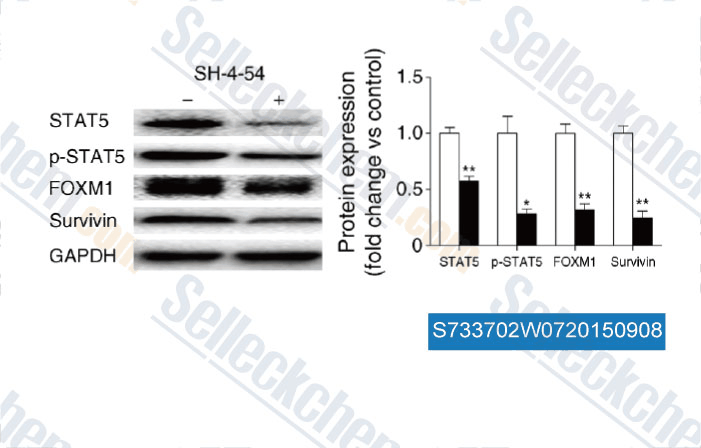
-
Gegevens van [ , , Diabetologia, 2015, 58: 2064–2073 ]
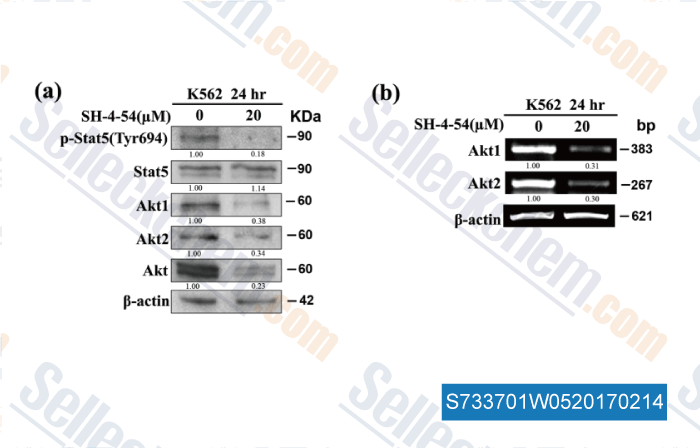
-
Gegevens van [ , , Sci Rep, 2016, 6:33358. ]
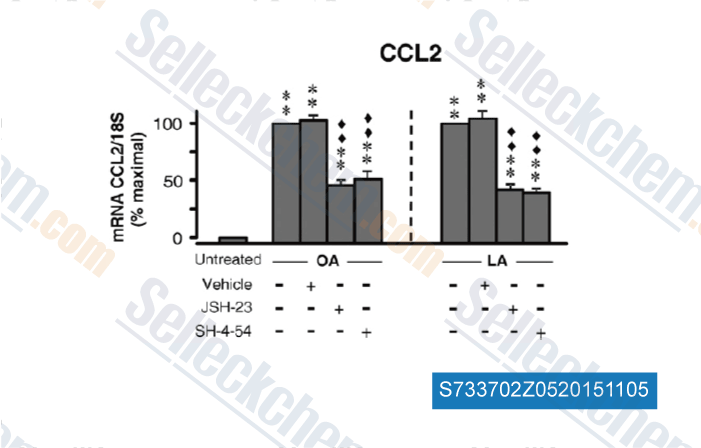
-
Gegevens van [ , , Biochim Biophys Acta, 2015, 1852(12):2671-7 ]
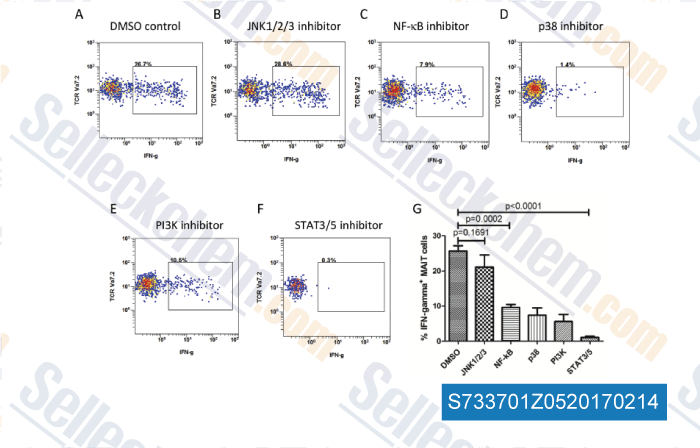
-
Gegevens van [ , , J Infect, 2016, 72(3):338-52. ]
Sellecks SH-4-54 Is geciteerd door 66 Publicaties
| Targeting synergetic endothelial inflammation by inhibiting NFKB and JAK-STAT pathways [ iScience, 2025, 28(9):113307] | PubMed: 40894883 |
| BTLA contributes to acute-on-chronic liver failure infection and mortality through CD4+ T-cell exhaustion [ Nat Commun, 2024, 15(1):1835] | PubMed: 38418488 |
| Blocking the MIR155HG/miR-155 axis reduces CTGF-induced inflammatory cytokine production and α-SMA expression via upregulating AZGP1 in hypertrophic scar fibroblasts [ Cell Signal, 2024, S0898-6568(24)00170-0] | PubMed: 38729323 |
| The Aconitate Decarboxylase 1/Itaconate Pathway Modulates Immune Dysregulation and Associates with Cardiovascular Disease Markers and Disease Activity in Systemic Lupus Erythematosus [ J Immunol, 2024, 213(4):419-434] | PubMed: 38949522 |
| JAK3/STAT5 signaling-triggered upregulation of PIK3CD contributes to gastric carcinoma development [ J Cell Commun Signal, 2024, 18(1):e12017] | PubMed: 38545256 |
| GM-CSF engages multiple signaling pathways to enhance pro-inflammatory cytokine responses in human monocytes during Legionella infection [ bioRxiv, 2024, 2024.12.05.627084] | PubMed: 39713445 |
| JAK-STAT Signaling in Inflammatory Breast Cancer Enables Chemotherapy-Resistant Cell States [ Cancer Res, 2023, 83(2):264-284] | PubMed: 36409824 |
| Homeostatic cytokines reciprocally modulate the emergence of prenatal effector PLZF+CD4+ T cells in humans [ JCI Insight, 2023, 8(22)e164672] | PubMed: 37856221 |
| CRISPR/Cas9-engineering of HMC-1.2 cells renders a human mast cell line with a single D816V-KIT mutation: An improved preclinical model for research on mastocytosis [ Front Immunol, 2023, 14:1078958] | PubMed: 37025992 |
| Single-cell transcriptome profiling of the immune space-time landscape reveals dendritic cell regulatory program in polymicrobial sepsis [ Theranostics, 2022, 12(10):4606-4628] | PubMed: 35832091 |
RETOURBELEID
Selleck Chemicals onvoorwaardelijke retourbeleid zorgt voor een soepele online winkelervaring voor onze klanten. Als u op enigerlei wijze ontevreden bent met uw aankoop, kunt u elk artikel(en) binnen 7 dagen na ontvangst retourneren. In geval van problemen met de productkwaliteit, zowel protocolgerelateerde als productgerelateerde problemen, kunt u elk artikel(en) binnen 365 dagen na de oorspronkelijke aankoopdatum retourneren. Volg de onderstaande instructies bij het retourneren van producten.
VERZENDING EN OPSLAG
Selleck producten worden bij kamertemperatuur vervoerd. Als u het product op kamertemperatuur ontvangt, wees dan gerust, de Selleck kwaliteitsinspectieafdeling heeft experimenten uitgevoerd om te controleren of de normale temperatuurplaatsing van één maand de biologische activiteit van poederproducten niet beïnvloedt. Na ontvangst dient u het product op te slaan volgens de vereisten beschreven in het gegevensblad. De meeste Selleck producten zijn stabiel onder de aanbevolen omstandigheden.
NIET VOOR HUMANE, VETERINAIRE DIAGNOSTISCHE OF THERAPEUTISCHE DOELEINDEN.